Saturday, September 28, 2013

One Last Hurrah for a Laying Hen

There's a chill in the air signaling the changing of seasons. There's also lots of feathers in the barnyard--the telltale sign of the seasonal moult of laying hens. During this time, egg production decreases significantly as all of the bird's energy goes into growing new feathers.This is also the time hens should be on their best behavior here at the farm. If you're moulting and a constant escapee, you get a one-way ticket to the processor and  ultimately, the stew pot.

So it's no surprise this seasonal product--the fatty stewing hen--is starting to show up at farmers market along with their younger, premium brethren--the tender, young broiler.

Don't understand the difference?  Think of dairy cows versus beef cattle. One is designed to push their energy into milk production, or in the case of the laying hen, egg production. The other, of course, has been bred to lay down as much meat as possible in the shortest amount of time with the least input (feed).

Just like cattle, there are also "dual-purpose breeds", many that fall into the "heritage" category.  However, as producers who rely primarily on animal production for income, many of us have learned that we need to balance market price with affordable production.

Would I like to raise all heritage breeds, which tend to be more colorful and unique? Absolutely! Can I afford a production time twice as long to produce the same amount of meat? No way. The truth is a good farmer worth their salt can feed a utility breed, like the Cornish Giant, a non-GMO feed and raise them outside on pasture making them just as tender, juicy and tasty as their Old World counterparts.

Similarly, as much as I would love to let my old ladies live out their natural lives here in peace on the farm, the reality is that there needs to be a return on my investment and that boils down to eggs or meat.

And just what does one do with a fatty stewing hen?

Here are a number of recipes for you to try as their flavor is unparalleled when it comes to making stock for soup. Fair warning however, their meat is best when shredded, diced or ground.

Schmaltz (aka Jewish Penicillin) 
This is rendered chicken fat used in place of butter, lard, tallow, etc. in cooking. Hint: use it to make the crust for Chicken Pot Pie. 


Ingredients:
1 fatty stewing hen

Directions: 
Remove all fat and skin from carcass. Blot dry with paper towels. Cut into small pieces about the size of a dime using scissors. Place in an  uncovered skillet and heat on medium low for 15-20 minutes until liquid fat pools in the bottom of the pan. Remove from heat and strain liquid fat using a mesh strainer into a glass container. 

At this point, if you want to make gribenes, the equivalent to cracklins when it comes to pork, add the cooked fat bits back into the pan with a thinly sliced onion and cook until crispy, but not burned.

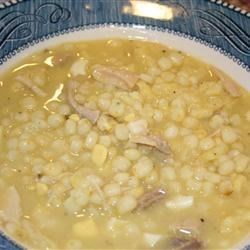
Chicken Corn Soup 
This is a Pennsylvania Dutch staple in late summer.


Ingredients:

1 whole chicken
1 medium onion, chopped
1 cup celery, chopped (note: I like to substitute chard stems)
6 ears fresh corn, kernels cut off cob
4 hard boiled eggs, chopped
8-10 threads saffron
1/2 cup fresh parsley, minced
Salt & Pepper

Directions:
Cover chicken in stock pot with water and bring to a simmer for 2 hours. Remove chicken and pick all meat from bones. Sauté onion, celery and corn until onion is translucent. Add to stock along with picked meat and saffron. Simmer for 20 minutes. Season to taste. Add hard boiled egg and parsley a few minutes prior to serving.
NOTE: Some variations include adding noodles or rivels (pea-sized dumplings made from flour and egg and then dropped into the simmering soup.)


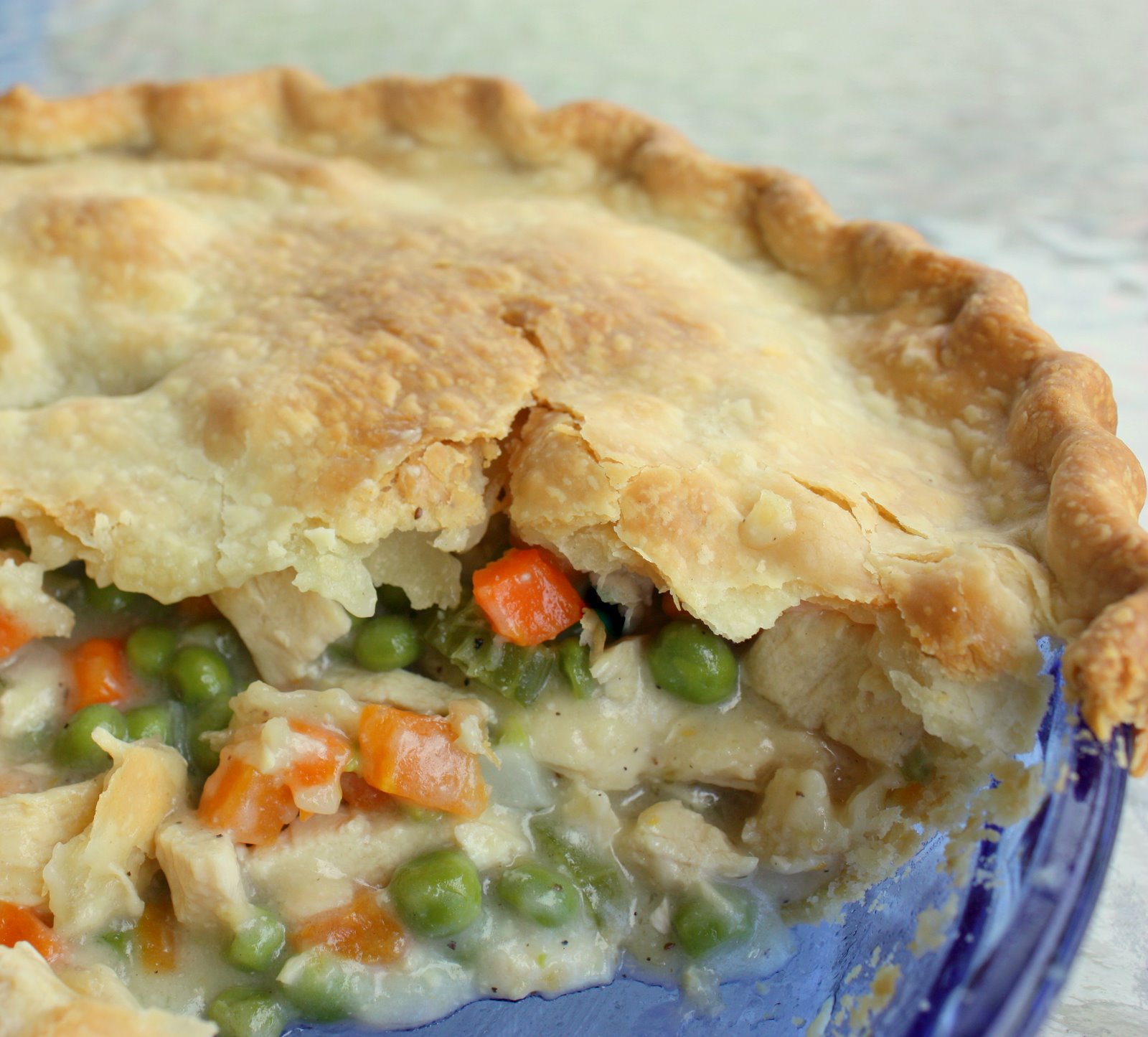
Chicken Pot Pie

Ingredients:
1 whole chicken
1 medium onion, chopped              
1/2 cup celery, chopped
2 carrots, sliced                             
1 cup peas or lima beans
2 tablespoons flour                       
1/4 cup chicken stock
1 tablespoon minced herbs Salt & Pepper
Crust or Noodles

Directions:
Cover chicken in stock pot with water and bring to a simmer for 2 hours. Remove chicken and pick all meat from bones. Sauté onion, celery, peas and carrot until onion is translucent. Add meat, stock, flour and herbs. Season to taste and simmer until thickened. 

To make traditionally Pennsylvania Dutch Pot Pie, add the liquid stock and large flat egg noodles, simmering until noodles are cooked. 

For a crusted pie, add chicken and vegetable mixture to crust and top with either another crust or breadcrumbs, cheese and butter. Cook at 350 degrees until bubbly and crust is golden brown.


Wednesday, September 25, 2013

PART FOUR: VEAL--The most difficult part of the process

This is the fourth of a five-part of posts regarding veal production for small-scale farms and why educated eaters dedicated to local foods and sustainable agriculture should be eating veal as well as beef.

HARVEST, PROCESSING & PACKAGING


I want to make this clear from the start--I DO NOT kill, slaughter, butcher or murder my calves...they are harvested.  Just like other farmers, I'm raising a crop destined to provide sustenance for human consumers.

Routinely, I am faced with someone staring at me with their sad, puppy-dog eyes and whining, "But how can you kill your babies?" And while to date I've avoided the urge to reach out, grab them by the throat and punch them in the face, I have instead, over time, developed a response that has led to the highlight of my veal venture--selling scallopine to a pair of militant vegetarian animal rights activists complete with placards of ugly, industrial veal barns ready to picket my stand at an outdoor farmers market in Washington, DC. 

First, let's get this straight. Just about all animals raised for human consumption today--industrial, organic, sustainable, feedlotted, pasture-raised and otherwise--are young animals who have not reached sexual maturity. In other words...babies. Meat chickens are 8 weeks, lambs and goats under a year, 6-7 months for pigs and beef producers like to keep their animals under 30 months so they do not have to spend the extra money at the processor to remove the spine prior to butchering due to new Mad Cow preventative measures. Very little in the food chain today isn't a young animal.

As discussed in Part Two of this series, dairy breeds are not conducive to putting on enough muscle fast enough to warrant a feasible return as a beef animal. These are the most likely candidates for veal. However, there are many smaller family cow-calf beef operations now leaving their cull heifers on the cows until weaning to produce premium veal instead of pulling the calf at birth and shipping to action for a fraction of what they'll ultimately reap from a finished product.

When to Harvest
This is where art meets experience. For me, the artistry is in cooking--what's the best size for a rib chop, loin chop and how does that translate into live weight and body condition? What cuts don't sell...ever? What sells out first?

Then there is the first time a customer returns your product with a valid complaint.

"These loin chops I paid $30 for last week have more bone than meat on them."

And there you are caught like a deer in the headlights out of ignorance. It happened to me....once. I removed every package of loin chops left in my inventory and ate them myself. The customer was right; what sorry little medallions of meat, barely a morsel, there were on the bones. After coming to farming via professional cooking, I was truly embarrassed by what I had sold my customers.

The next time I dropped animals at the processor, I confronted the butcher about the chops.

"Hey, I just cut what you tell me to cut," he replied.

"Well, I'm not here when you're cutting up my animals and from now on, I don't want you cutting anything that you wouldn't serve to a guest at  your house. Turn it into a roast or grind it and pack the bones," I requested.

"Yes, ma'am," and with that I never received another complaint from a customer about the quality of a cut.

To further increase my knowledge about my products, one winter I took three calves of varying sizes, breeds and weights to a custom butcher for private sale. He agreed to allow me to work with him while he processed the carcasses from the kill floor to the packaging.

From this experience, I learned things I would have never considered such as informing the processor before the animal is harvested that you want to have the tongue and sweetbreads (thymus gland that runs along the esophagus and trachea and the pancreas). Don't just list them as a request on the cuts sheet as it is often only ready when the carcass is ready to cut. By then, these items will have been long gone as they are not routinely cut by small-scale processors.

With holding feed for twelve hours prior to processing makes a huge difference in the cleanliness of the whole deal. A full rumen is a most frightful and nasty thing to contend with during processing. That's one of the reasons most processors ask for animals to be delivered to their holding facility the night prior.

Scallopine is best when cut with the fiber direction by hand from a single muscle instead of the whole boneless rear thigh cut on a slicing machine when partially frozen. Here's the difference in the kitchen--one gets the crap pounded out of it with a hammer before it's tender enough to cut with the fork, the other doesn't.

Many processors are also farmers at one point or another and can teach you a thing or two about the health of your animals as they are  harvested.

Livestock (not just calves) that don't have proper access to minerals are much tougher to bleed out and skin. That you have a sub-clinical issue with pneumonia. That your livestock has a heavy parasite load and what kind--Barber Pole worms in the stomach, liver flukes, lung worms, lice and ringworm. Don't just blindly drop off your animals at the processor, pick them up and pay your bill without a quick conversation as to anything notable. Ultimately, developing a relationship with your processor will help you to deliver a first-class product pleasing everyone involved in the process from the pasture to the plate.

Invariably, the question gets asked, "How old are your calves when they are harvested?"  This is a timely answer because veal can be harvested at number of ages depending on the conditions. Primarily, I choose to harvest by weight. In the colder months, calves do not grow much so they may live a few months more than their counterparts on whole milk, spring flush or browsing with goats. Holsteins are born one third of the way to finished weight for me as I choose not to raise animals much past 300 pounds.


However, there are other farmers/ranchers who will take their veal calves as high as 700 pounds prior to processing, which, if left on the mother for a full season will easily reach that weight being only milk and grass-fed.

The commercial guys have told me that I'm not raising real veal since I allow my animals to move around, wean them from milk, let them eat grass and let them get so big. But the truth is veal has traditionally been the young male offspring of the dairy calves that are harvested at the end of the grazing season  prior to when farmers had to start feeding their  herd stored forage. Some might be several months old while others were only a few months old. The whole idea is to harvest non-essential animals that have been fed by the grace only by Mother Nature, a cash crop with little to no inputs.

That means for some farmers, the limiting factor is pasture and forage. When the field go dormant, the calves get harvested, period.

Once, I took a bred heifer just over a year old who was already showing signs of chronic mastitis to the processor for a neighboring farmer along with my own animals saving them the trip for a single animal. When the meat was returned to them it had been graded by the inspector as veal and labeled as such prompting quite a tirade on the subject.

And some days, there are those gangly little souls who, no matter how much milk or lush pasture you give them, just never seem to thrive. Speaking from experience, I prefer to harvest them underweight and strictly for sausage which guarantees a solid price. You'll know who these little guys are.


Choosing a Processor
Farmer and author Forest Pritchard tells the tale of his first processor in his first book, Gaining Ground, which had me on my feet screaming, "I'm not the only one!" Like him, I suffered through processors who failed to return all the meat from my animals, who mis-labeled product, who didn't package well and who made fun of what I had chosen to do with my livestock.

The first processor returned meat what was at least four different identifiable animals so he was cut off after the first try. Similarly, the second processor barely made it past the unloading of my calves when young man charged with unloading stock immediately went after my already confused and afraid calves with an electric cattle prod.

Grabbing the gadget from his hands and waving it in his direction I bellowed, "Don't you ever use this on my animals or I guarantee I will use it on you!"  I then grabbed an empty 5 gallon bucket and rattled it enough to get the calves' attention as they were still cowering in the front of the stock trailer.

"That bucket is empty," said the young man who had be relieved of his hot stick.

"They're just bull calves. They don't know any better." I replied as the pair followed me out of the trailer, up the ramp and on to the kill floor holding pen as we were the first to arrive that morning.

Given how the day started, I should have taken it as a sign and left them on the trailer, returning home to find another processor. The calves were slated to be sold by the half to three different customers and I was keeping the fourth half so I could cook my way through a calf to better understand the cuts and enjoy the fruits of my own labor.  In making arrangements with the processor, they assured me that each piece would be labeled.

"Would you like to have your meat vacuum-sealed?"

"Yes, please."

The only problem was he failed to tell me that when meat was vacuum-sealed, it could not be stamped with the ink stamp names identifying each cut. Worse, both calves were randomly packed in liquor boxes leaving me no idea what a quarter of each animal was.

"Well, you can just divide all the packages up by four," the man replied when I asked how I was going to identify all the little frozen pink blobs.

"What was their hanging weights?"

"Oh, they weighed about 150, maybe 160 pounds each...somewhere in there."

"I'm charging by the pound, like beef, and I needed to know the hanging weights. I had it written on the directions and told that to the man who helped me unload." Maybe I shouldn't have threatened him with the hot stick.

"Oh well, next time we'll get the weights."

There wouldn't be a next time for him.

Finally, I asked a local dairy farmer who sold veal at farmers markets along with their farmstead cheese where they got their calves processed and was turned on to a processor who were like a dream come true--reliable, professional, clean and could follow directions almost too well. 


Little did I realize until reading his book, that Forest was responsible for urging Mennonite family who has run their USDA plant for over 50 years into doing market cuts and packaging that I, as well as many mid-Atlantic livestock producers, now rely upon.

If you are going to be
  • Selling at farmers markets
  • Crossing state lines
  • Selling individual retail cuts from your farm store
  • Selling to a restaurant, grocery store or butcher shop
  • Create any value-added product such as sausage
you MUST process under a USDA-approved inspection facility. I've come across a lot of people with the rise of the local foods movement who cut corners processing at custom facilities or doing it themselves. For private sales of whole animals, farmer to consumer, this is fine, but it is imperative to understand the state and federal regulations if you want to sell animals under any of the above conditions.

The first step in choosing a processor is to find one that is able and willing to process your calves. Forget the phone book, ignore the Internet--use word-of-mouth, first-hand recommendations from other farmers. This is the most reliable way of engaging the services of a processor.

Then next step is to visit the processor. Make an appointment to speak with them at a convenient time. Don't just show up and expect their time and attention, especially on receiving and kill days when their attentions are demanded elsewhere.

Questions to ask:
  • What day are calves dispatched?
  • Do you require stock to be delivered the day prior?
  • Do you have a minimum/maximum number of animals?
  • Do you provide labels or must the producer? 
  • If the producer must provide labels, what are the specifications?
  • Do you vacuum-seal?
  • What is your lead time? (meaning, if I call you today, how long before I can get an appointment)
  • Do you offer value-added products? (patties, sausage, etc.)
  • Do you flash freeze on shallow carts or just pack meat into boxes and place in freezer?
  • Ask for a services list with the prices of each service.  
In addition to the services and price list, it's good to ask for a cut sheet as well. For example, when I chose only from my first processor's cut sheet, I did not get the highly coveted osso buco cuts which are lovely cross-sections of the shanks and the first items to sell out at market.

So let's take a closer look at the different types of cuts and packaging.

The Final Product
Recently, I spoke to a dairy farmers in New York who is just beginning to market their veal.

"One of the challenges we're having is getting our customers to understand the cut sheet because it's not like a beef," was their comment that got me thinking about my experiences with raising, harvesting and selling veal retail.

If there is one piece of advice taken from this installment, I want it to be that YOU, as the producer, should be making the final judgement call on when and how to process your animals...not the customer. They should only be given that right when they are standing next to a live animal and have run their hands over its flesh to verify that is the size they want.

Over the years, I have had many goat customers who have chosen their own animals, but never for veal. This is one product in which customers are quite happy to trust the producer's judgement.  

Here is a list of my cuts for premium calf cuts I have sold over the years and their popularity.
  • Rib Chops & Loin Chops - good seller
  • Cubes/Stew - great seller
  • Scallopine - great seller
  • Ground - great seller
  • Patties - good seller
  • Sausages - great seller
  • Osso Buco - can never have enough
  •  Ribs - weak seller
  • Shoulder Roast - mediocre seller
  • Sirloin - mediocre seller
  • Organs - great seller
  • Boneless Loin - good seller
  • Whole Loin Rack - mediocre seller
  • Bone-in Rib Roasts - mediocre seller
  • Breast/Brisket - weak seller
  • Bones - great seller
  • Whole Head - good seller
Yes, you'll notice the head and the bones on that list. These two items are extremely coveted by chefs and foodies. Recently, a senior editor at Bon Apetit listed her favorite meal of the year as being ravioli stuffed with calf brain and within a week of the magazine's publication I had at least a dozen requests for my heads.


Note: in order for the head to be returned to the customer, for either USDA or custom, the animal must not be dispatched with a bullet or captive bolt. Another good question for your processor.

And bones! Don't forget to package and label the bones. Unless you have a standing order from a chef, ask for 3-5 pound bags as that is what most home cooks can handle at a time. If they want more, they'll buy more. Good veal bones make the most incredible, silky, gelatinous stock. 

But what about those less-than-premium calves? While it's easy to turn an entire animal into burgers and sausages, there's no need to grind certain cuts that are perfectly fine and would command a better price per pound than burgers or sausages--mainly the Osso Buco and boneless loin. Similarly, be certain to have all the bones packaged and labeled for sale.

In the list above, you'll notice a few "value-added" items. Some of you may not have heard this term before. It's part of the lexicon meaning to change from it's raw form to create another product with increased value. For me, sausage and patties top the list. Fair warning though, these items require an added expense to produce and this must be reflected in the final products' pricing.

For instance, my processor charges $0.10 for each patty made and as much as a dollar per pound for sausage depending on the flavor and type of casing.

For producers with access to a licensed kitchen, other value-added items might include:
  • Demi glase - a rich stock based sauce which is a staple in fine cooking
  • Stock
  • Ravioli
  • Stew
While going to farmers markets or selling retail via buyers clubs is not for everyone, with the right marketing veal can also be sold whole, by the side or in primal cuts. It is best to simply wrap these in sheets of food-grade plastic and deliver fresh.

While growing up, I remember my family splitting a side of beef with their friends and everyone getting together wrapping meat in waxed paper and taping shut with freezer tape. In this day and age, there should be no reason that a processor would ever wrap meat in paper destined to be frozen and sold for retail.

But just because a processor owns a commercial vacuum sealer doesn't mean they know how to use one properly. Vacuum-sealed product can last up to two years in a deep freeze without any ill effects to the meat. Bone-in cuts are particularly difficult to seal. If you notice that your packages of chops tend to not maintain their vacuum, ask that they be bagged in another plastic bag prior to the final seal. Some processors will even use small patches of mesh to cover parts of bones for a better seal.

Scallopine should be packaged in flat sheets, not all rolled up into a ball.

Before having a large run of patties done out the ground, ask if they are frozen in patty form before sealing. If not, ask this to be done or don't make patties. Nothing is more visually unappealing than patties squished beyond belief when sealed. Some processors also do this for sausage links as well.

In the end, it's not just producing a healthy, harvestable animal that is key to raising veal for sale, but to present that animal after harvest in a way that is pleasing to be cooked and eaten.

Highlights of this segment....

  1. Learning when to harvest calves.
  2. How to choose a processor.
  3. Determining cuts of meat.
  4. Packaging professionally. 
Stay tuned for the final installment of this series when we'll wrap up with sales & marketing. If you've missed any of the series, the previous installments can be found here:


PART ONE to this series can be found at this link.  
PART TWO of this series can be found at this link.
PART THREE of this series can be found at this link.
PART FIVE of this series can be found at this link. 

Thursday, August 29, 2013

What the Heck is a Primal Cut?

Primal cuts are the big chunks that make for easier handling of whole carcasses after the animals has been slaughtered and hung. Well known and understood in the realms of professional food service, chefs, butchers and meat counters, primals are not as popular or well-understood by most consumers because they are not readily available.

But as the farm-to-table, sustainable, localvore, humane, organic, pastured livestock movement gets a foot-hold, home meat purchasers are going to start seeing a lot more of these types of cuts previously only known to the world of professional meat. Let me explain.....

First, in raising livestock the reality is that not all animals are going to produce the premium cuts that so many customers are accustomed to thanks to industrial agriculture. Many breeds of meat animals have been bred to put on as much muscle as possible in a short amount of time with minimal inputs. Often, this means grain-fed. Think of those plump, well-marbled lamb chops with their tasty medallions of loin the size of a lid on a Mason jar. And it seems that all the leg-of-lamb recipes on the Food Network or any other popular media outlet begin with 5-8 pound piece of meat.

But in using lambs as an example in comparison to goats, it's apples and oranges--or should I say caprines and ovines. First, there are two distinctly different body types for goats--dairy and meat--similar to cattle. One has been bred to put as much energy as possible into milk production resulting in a thinner, leaner framed animal. Animals bred to produce meat have heavier, well-muscled bodies and once the skin comes off, this difference becomes even more evident.

I've always been amazed by people who think that there is a hard and fast line between production animals and their ultimate destination--milk animals are not used for meat, meat animals are never milked and the two are never bred to each other. But many milk producers (especially in the goat world) breed their females to meat-style males in order to produce more marketable male offspring.

However, in doing so, the phenotype of these offspring don't always exhibit strong meat-type traits and thus must be harvested at a smaller weight in order to produce a marketable (and profitable) product. To allow young male goats with more dairy characteristics to grow larger would require more inputs and time, but still may result in larger bones with minimal muscling and no one wants more bone than meat on their dinner plate. Instead, these animals are harvested at a younger age while still plump from the fattier diet that includes their mothers' rich milk with bones proportional to their meat ratio.

Again the question is raised, "Why primal cuts?"  This time it boils down to economics. As red meat sold at farmers markets, it MUST be processed under USDA inspection. You'll notice not just the blue stamp on the meat, but the little round circle on the label with the processing facility's identification number. Most USDA processors charge a flat fee for killing, cleaning, hanging, cutting and packaging a small ruminant (goat, lamb or veal). The smaller the animal equals the larger cost per pound for processing. When smaller animals such as milk-fed kid and lamb (usually 50 pounds and less live weight) are processed, it makes more economical sense to cut into primals otherwise the cost per pound would have to be significantly more. And I can guarantee that no one wants to pay a premium price for a pathetic cut of meat. (yes, this is the voice of experience)

Part of being a good farmer and direct marketer is knowing when to harvest an animal that is going to satisfy both the customer and the seller.

This is why the latest batch of goats to be harvested have been cut as primals. They were milk-fed kid goats from dairy/meat crosses that just weren't going to yield well at the minimum size required for individual cuts. As my customers know, one of the big reasons I raise meat is due to my former life in the professional food realm. I want to produce delicious and organically raised meats, most of which I have found difficult to obtain due to our industrialized food system. That includes naturally-browsed goat meat, milk-fed kid, humanely-raised rose veal and pastured poultry.

So, what are the primal cuts available and how can they be used?
Basically, an entire goat is cut into six large pieces--three from each side. Here they are with an explanation of what they normally would be broken down into on a larger carcass and tips for  how you can either break them down yourself or cook them whole.

Forequarter--this is comprised of the whole shoulder, foreshank, neck and breast. Lots of great connective tissue, too, that makes for rich stews and curries. The various cuts can be separated at the joints using a only sharp knife. Individual cuts can be roasted, braised or grilled. As there is much less fat on goats than on lamb, beef, pork or chicken, if you smoke goat it is best to wrap in foil so it does not dry out. This primal cut is the heaviest, typically weighing 4-5 pounds.

Rack--this is what I consider the best of the best. Cuts from this primal include rib chops, loin chops or without the bone, the entire loin can be fileted off the bone--a real luxury! There are also ribs and belly. One of my all-time favorite things to do with this cut is put it meat side up on a large baking sheet, sprinkle with a mixture of bread crumbs, fresh herbs (especially rosemary), olive oil, a flavorful hard, dry grated cheese (don't you dare use fake Parmesan out of a cardboard can), fresh black pepper and large grain sea salt and bake for 20-30 minutes in an oven preheated to 450 degrees. You can do this on an outdoor grill or even better, in a wood-fired oven.  Fair warning, if you want to cut your own chops, you are going to need a saw or a heavy cleaver. This primal cut is the smallest, typically weighing 2 3/4 to 3 1/4 pounds.


Leg--the entire rear leg is comprised of the chump, leg and shank. While most people like to roast up one of these bad boys on a rotisserie, just as easy and delicious is cutting the meat off the bone in large cubes and making kabobs. Similar to the rack, the leg can also be roasted until the internal temperature at the thickest part of the leg reads 150-155 degrees F with a meat thermometer. This primal cut typically weights 3 1/2 to 4 1/4 pounds.

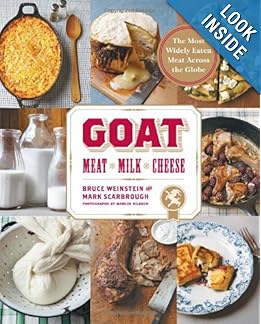
And if you're still left wondering how on earth to cook goat meat, I would suggest Bruce Weinstein's book, GOAT: Meat, Milk, Cheese which as many wonderful recipes, including my favorite Goat Chops with Blackberries. 


Friday, August 23, 2013

PART THREE: VEAL--Let The Fun Begin

This is the third of a five-part of posts regarding veal production for small-scale farms and why educated eaters dedicated to local foods and sustainable agriculture should be eating veal as well as beef.

HANDLING, CARE & FEEDING
Now that your calves are safe and sound at your facility from their initial transport from the dairy where they were born, it's time to really understand what it is to handle animals with the mentality of an infant yet the size of a large Labrador Retriever or Great Dane because that's how big they'll be when they're less than a week old. Being born is a tiresome business and just like all other newborns, calves want to do three things for the first few weeks of life: eat, eliminate and sleep.

One thing I've said yet folks often fail to comprehend is just because a calf may weight a hundred pounds when they hit the ground, they are more delicate than a kitten. Think about that. I've watched as momma cats have drug their kittens from nest to nest shortly after giving birth with little adverse affects, yet when humans go hauling calves from one place to another--sometimes even on the same farm--the result is a failure to thrive. Calves that are stressed, especially those who have been moved away from their mothers in less than 72 hours after birth, often suffer from a number of maladies, the three big ones being pneumonia, Coccidiosis and E. coli.

Several of my suppliers have been more than willing to provide me with the bull calves at a week old as they detest the local sale barns where they have often seen calves still wet from birth in the auction ring. Many of them even pen cows and calves together allowing the calf to nurse naturally prior to putting the cow back into the parlor and just keeping the precious immune-building colostrum (first milk) that is critical for the health of newborns. 

To minimize stress, for the first week minimize handling. The only time I handle calves during week one is when they are fed. That's not to say I don't check on them often, but when I'm not feeding them, it's an unobtrusive look in to make sure they aren't laying flat out on their side or have gotten their head stuck in a water bucket or some sort of other mischief. 

Feeding always begins with individual bottles. NEVER FEED A CALF WITH A BUCKET. Calves mouths (and all mammals who suckle) are designed to use a nipple. Would you try to feed a newborn child out of a cup when it is only days old? This is the most unnatural thing for a calf and it will not consume enough milk to thrive. By using individual bottles, you can be certain how much a calf is consuming. Look for copious saliva production when your calf uses a nipple. This is a sign of healthy and will aid with digestion of the milk. When calves feed from buckets they do not salivate. Bottles are also the easiest way to delivery remedies if within the first few days, a calf begins to scour (diarrhea). About 90% of the time, scours can be alleviated by adding 1-2 raw eggs and either  8 ounces of cultured whole milk yogurt, cultured buttermilk or raw milk to the bottle if you are using a milk replacer formula.

There is another reason I choose to use bottles for the first 2-4 weeks--the calves will become extremely tame and follow your wiggling fingers making them much easier to lead as they grow larger. Calves will willingly jump on to a stock trailer at the sight of a bottle or mommy bucket which has multiple advantages--low stress for the animals and safer for the farmer. Because of this practice, I have been loading my calves by myself for years now when it's time to harvest them. There is no need for expensive chutes, electric prods or brute force. A word of caution, however. This type of devotion can also result in safety issues when in open pasture with larger calves. For calves who have been started by holding their head between my legs in order to get them to take a bottle--this is particularly needed for calves allowed to suckle from their damn instead of going straight on to the bottle right after birth at the dairy--calves will nudge from behind out of habit. If the calf is large enough, you will end up on your rear end as it runs between your legs looking for a bottle.  

A note about milk replacer formula--there are many options out there on the market, some are medicated. Medicated feed can include antibiotics to reduce issues with E. coli and/or medication to prevent Coccidia (protozoan parasite). Similarly, less expensive formulas are based upon soy and include blood plasma to boost protein content. From my experience using many different brands and formulations of milk replacer, I've found that investing in a quality product up front will give you a quality product upon harvest. I do not use milk replacer formulas that contain either soy products, plasma or medication. 
While I do not agree with some of the advice given in this publication, it does a good job at explaining all the ingredients in commercial milk replacer formulas. 
http://www.aphis.usda.gov/animal_health/nahms/dairy/downloads/bamn/BAMN08_GuideMilkRepl.pdf

Once you have decided on a type and brand of formula, DO NOT SWITCH. This is a sure way to upset your calves' digestive systems and set them back in gaining weight. My rule of thumb is to always keep at least one unopened bag of replacer on hand when feeding calves. That way I am certain not to run out and make a mad dash for the feed store only to find out they, too, are out. 

When choosing a formula, don't just look at the ingredients to make your decision, but read the mixing directions as well. Some formulas only call for 8 ounces of powder per quart while others require 10, even 12 ounces to make quart. That fifty pound bag may sound like a deal compared to other brands, but in the long run will end up costing more. 

There has been much debate and experimentation on how much and how often to feed calves. I start out feeding two quarts a day--morning and evening for the first week and then adding a full mid-day bottle for larger breeds the second week. This is where paying attention to your livestock is critical. Will they drink a full bottle at mid-day? Are they enthusiastic about their evening meal? Are they showing signs of scouring? By the third week or fourth week, I try to have them up to four bottles a day (2 gallons). While this type of feeding schedule can wreak havoc with your social life, it's well worth the effort until the calves are transferred to mommy buckets and dialed back to two 1-gallon feedings per day. 

I've mentioned this contraption called a "mommy bucket". What is it? Basically, it's a bucket with two nipples attached to it. Some folks use 5-gallon buckets, others prefer flat-backed square buckets. I have access to lots of 3-gallon buckets so I use them. They cost about fifteen bucks each to make. While you may be able to find bucket teat units at your local supply store, I purchase ALL of my mommy bucket supplies from Premier One Supplies.(the exception for this being the bucket and hardware for hanging the bucket on the fence) Advice to the wise---ALWAYS keep extra teats and extra rubber gaskets on hand and spend the extra $3.50 for a teat unit wrench. Tractor Supply and many of the local suppliers carry a brand of teat that is black. While these work in a pinch, they will not last an entire season. Teats are less than $2 each so like the straw for bedding, start with fresh when starting a new batch of calves. Mommy buckets will get dirty and should be cleaned regularly, but after their use with batch of calves, I remove the teat unit from the bucket and thoroughly sanitize them cleaning out any goo that has collected inside. At the same time, I replace the teats and if needed, the gaskets.

There are three main areas where calves are kept here at Painted Hand Farm--the barn, the paddocks and then the pastures. 

Upon arrival, calves are housed in large stalls 16'x16' well-bedded with straw. They have access to fresh, clean water at all times. Larger calves, such as Holsteins or Brown Swiss are kept two or three to a stall, but the smaller breeds such as Jersey and Jersey crosses can have four. Personally, I like to keep it to two as that is what is easiest for one person to feed without getting mugged. 

After they've spent their first week here at the farm, I begin letting them out of the barn into a large paddock area in the morning after their first feeding and then bringing them in later in the afternoon for their second feeding. This allows the calves access to fresh grass and to interact with the others who will ultimately become their pasture mates. One of my favorite things about raising calves (other than Osso Buco and sweetbreads) is watching them run for the very first time. Be prepared for a few face plants into the ground and fence during this time as they learn to use their legs.

Another reason I prefer keeping calves in the barn is the smaller space makes it easier for bottle feeding and to eventually train to suckling from a "mommy bucket". Once they have successfully mastered the mommy buckets, calves are moved to outdoor paddocks constructed of woven wire as at this point they are not ready for high tensile electric wire, which they will run right through. A terrified calf that has been shocked is no joy to catch.

One note of housekeeping advice here--when calves leave the barn for good, clean out ALL of the bedding  and spray down the area with a bleach solution. I use a 1-gallon garden sprayer with a 1:10 dilution. Similarly, thoroughly clean and sanitize all buckets and bottles used by those particular calves before starting the next batch of calves. And when bedding the animals, make sure NOT TO USE MOLD OR DUSTY STRAW.  These few simple steps of cleanliness will ensure a better chance of raising healthy, vigorous calves (or any animals, for that matter.)

In the outdoor paddocks (the smallest being 60'x60'), no more than six calves are housed together at a time. In many mob-feeding operations, at this stage of the game they routinely house up to two dozen calves together, however, I've found that even when calves are of similar size and age in groups of more than six someone still gets out-competed for food and will fail to thrive. Since this series of articles is aimed at people getting started with veal calves, I'm going to stick to my advice of only housing six at a time together when they are in the 1-2 month/100-200 pound stage. 


At this stage, the calves are hardy critters and can withstand all seasons as long as they have access to clean, fresh water and shelter with dry bedding. Again, do not use dusty or moldy straw. In the winter months, I will also bed with grass hay mixed with alfalfa to give the calves something on which to nibble. At no time do I ever use saw dust. It's expensive, messy and causes respiratory issues.

 This is also the stage where if you choose to feed grain, you can start offering it to the calves. I've had a love-hate relationship with grain over the years. It's always a fine balance between getting an animal to market weight in the requisite amount of time. Jersey and Jersey crosses are difficult to get to market weight in less than six month on just milk and grass. If you have the time and the grass, that's great. Go for it. You'll be blessed with delicious meat, especially if calves have access the milk the entire time. However, if you are using milk replacer, this is not feasible to feed out a calf entirely on milk. At this point, there are two choices--good, quality alfalfa and/or 16% protein calf feed. 

In the paddock, calves are pretty much on autopilot--eat, sleep, pee, poop & play. Being in woven or welded wire, there's little chance of escape and they are large enough that a bout of scours isn't going to kill them in a few hours. That doesn't mean, however, that they can be ignored. Just as important as what is going in the front end, you want to keep an eye on what is coming out the back end. By now the calves will be nibbling at the grass and their stools should be firming up to look more like cow patties. But if a calf is squirting watery diarrhea, it's time to take a good look and figure out what's going on. 

Scours can be caused by a variety of agents--protozoans (Coccidia, Cryptosporidia), bacteria (E. coli) and virus (Roto or Corona virus). Knowing the symptoms of each is critical for understanding how to treat the calf. Viruses need to run their course and the only thing to do is isolate the calf and provide enough fluids to prevent dehydration. A Coccidia infection will result in a brilliant yellow diarrhea with a more gelatinous texture and streaks of blood. Coccidia is present naturally, just like E. coli, and is a malady caused by stress, a depressed immune system and poor management (sanitation & crowding). 

Stress, stress, stress, scours, scours, scours....now you know why I say calves are more delicate than kittens. They are not meant to be taken from momma, trucked to auction, trucked to a barn where they are crowded with lots of other calves and fed unnaturally in a bucket with soy and blood-based slop loaded with harsh chemicals to prevent them from getting sick--minimal transport, minimal crowding, minimal problems, maximum return. 

The final stage of grow is off to the pasture. For farmers just getting started or who have minimal land, life in a large paddock with access to grass and good hay works just fine. Here at Painted Hand Farm we are set up for rotational grazing and browsing with a series of pastures, paddocks and alley ways. Larger calves (150-200 pounds) are put into pasture with well-bedded shelters and fresh water. Mommy buckets are hung on the gates while milk is still being fed. 

Keep in mind that while they are still mentally babies, they are now getting big enough to hurt you even though they are not being malicious--they're just being calves. I do not castrate my bull calves as I believe an open wound only sets up opportunity for infection and it causes needless stress on the animals as they will be harvested before they reach breeding age. That does not mean, however, they won't exhibit behaviors such as mounting each other as a form of play. They're young males doing what young males do and again, these are words of caution from experience. When bull calves surpass 200 pounds, when you are in open pasture with them, carry a stick, do not run from calves chasing you, do not turn your back on them. Their hooves are sharp. Wear shoes with closed toes, preferably boots. Crocs don't count as shoes even though they're easy to clean when a calf craps on your feet. You will be slobbered on, sucked on , chewed on, peed on, crapped on, kicked and even knocked down a time or two before you get the hang of handling calves. 

Raising calves for veal can be a rewarding and profitable venture for new and beginning farmers as long as you use common sense. As the adage goes--you are what you eat eats. I am a firm believer that when people eat sick animals, they too become sick. Calves that are raised in an industrial environment aren't the ones ending up at farmers markets, fine dining establishments and boutique butcher shops--they're the ones ground into breaded patties and served smothered in sauce for less than $10 a plate.  Calves raised in clean and humane environments that are well-fed are in demand by discerning and educated consumers who understand the value and increasingly, customers are also becoming aware of the carbon footprint associated with raising beef as opposed to that of harvesting animals at a younger age. 


Take aways for this installment......

  1. Calves MUST HAVE had a good start with colostrum in order to live and thrive.
  2. Use a non-medicated quality milk replacer.
  3. Started calves on individual bottles to ensure their milk intake.
  4. How to build a 'mommy bucket'.
  5. Causes and cures for scours.
So if you are a new or beginning farmer in an area were you have access to dairy bull calves consider raising veal.

In the next installment of this series, I'll be talking about harvesting, processing and packaging. Stay tuned.....

Follow Sandra throughout the rest of the series at these links:
PART FOUR of this series can be found at this link.
PART FIVE of this series can be found at this link.  

Tuesday, July 30, 2013

PART TWO: VEAL--Getting Started

This is the second of a five-part of posts regarding veal production for small-scale farms and why educated eaters dedicated to local foods and sustainable agriculture should be eating veal as well as beef.

Let's face it, just like any other business, getting starting with farming involves capital expenditures. Fortunately, today there are more programs and paradigms designed to fund first-time farmers who aren't following in their family footsteps and inheriting a functioning farm or even fallow land.

Land is expensive. Equipment and infrastructure is costly, including when purchased as used. Even if you have access to both, the time and labor required to start any agricultural-based venture can take years to develop herds, pastures and soil fertility.

For small-scale ventures, I've found that the investment needed to start raising veal calves is quite similar to that of pastured poultry. As with poultry, prior to the arrival of the livestock there must be some type of infrastructure in place. Let's start there.

Facilities & Equipment
With the advocacy of leasing land, the minimal infrastructure required makes veal production ideal for anyone not wanting to make expensive capital investments on land they do not own. Whether or not you own your land will most likely determine the type of fencing installed. I just want to preface this section with the advice that regardless of the type of fencing system you use, this is not an area in which you want to skimp, go cheap or used (if you can help it) or do a half-assed job. Good fencing, regardless of permanent or temporary will be your biggest return on investment.

Here at Painted Hand Farm, my fencing runs the gauntlet from fortified quarter-inch hardware cloth, pre-fabricated feedlot panels, Red Brand SafeGuard, six-wire high tensile, portable electrified netting and portable step-in fiberglass posts for IntelliRope hotwire. I have had calves in all kinds enclosures depending on their age and the area in which I want them kept. I would suggest using common sense when choosing fencing. Younger calves should be in stronger, non-electrified enclosures and as they get older can be moved into more flexible configurations.

Prior to raising veal, I had been developing a commercial meat goat herd and it didn't take long to realize that calves aren't much bigger than full grown meat goats, thus, they were able to also utilize the same inexpensive, portable three-sided huts I had previously built for the goat herd.

My huts are 3'x4'x8' each. Set up in pairs facing each other with a standard sheet of plywood covered with rubber roofing or some other water-impermeable material, these huts have the capacity to shelter up to six calves at a time quite comfortably until they reach approximately 300-350 pounds.

The first set of three sided huts built here were made out of a shipping crate for a network attached storage device and the aluminum sides of an above-ground swimming pool, which, ironically has the appearance of wood. They are still in use and good repair after twelve years. I  have also built lighter versions from a wood frame and metal roofing. While more expensive, the total cost of a pair of huts (approximately $250) is still considerably less than the price of a single calf hutch (approximately $400 new). I have also seen wonderful shelters made from straw bales and wooden pallets.

My point on housing is it does not have to be anything expensive or permanent in order to be effective.

Veal calves can be reared on a fraction of pasture compared to beef which requires several acres per animal to reach a harvestable weight. Calves gain most of their nutrition from milk and are smaller animals, thus require less forage. I've found that running calves with goats in browse areas works especially well as the calves learn to browse the high-protein forbs from their caprine counter parts thus providing them with richer nutrition leading to better growth rates.

If you do have access to several acres, you may want to consider using nurse cows as opposed to feeding milk replacer. This is when multiple calves are grafted to a single milk cow, however, this often requires investment into a head gate and will be covered more in my next post covering feeding.

For me, feeding the calves is the funnest part. You know the adage that boys don't really grow up, they just buy bigger toys? Well, in my case this girl just got dollies that drank out of bigger bottles!

While bottle feeding is fun and works great for the first few weeks, my favorite contraption is a mommy bucket. They are inexpensive to make with simple supplies from Premier One Supplies.  Most importantly, they allow you to feed larger calves more than two quarts at a time safely from the opposite side of the fence.

Breed Types & Acquisition
When I first began raising veal calves unexpectedly, I started out with pure bred Jersey calves because they were free. The dairy farmer had to pay to have them taken away so I was actually saving her money. But years later when they were no longer available to me, I switched to Holsteins. Although I had to pay for the calves, I found that their larger size meant they made it to market weight faster or yielded more given the same inputs over the same amount of time it took to get a Jersey calf to harvest weight.

I am very fortunate living in a dairy-rich area and have been able to cultivate relationships with several dairy farmers who will offer me first crack at their bull calves prior to sending them to the local livestock auctions. One thing I want to make perfectly clear to anyone interested in raising calves for veal and that is NEVER BUY CALVES AT A PUBLIC LIVESTOCK AUCTION!!

Despite their size, calves are more delicate than kittens when it comes to being moved around so soon after birth. I've seen a momma cat drag her babies to a  new spot every day for a week running after giving birth with no ill effects to the kittens, yet calves picked up by a hauler, tossed on a trailer with umpteen other calves from various farms, trucked for hours, run through a public sale barn and trucked with yet another set of animals to another location often suffer from both digestive and respiratory distress requiring the administration of harsh chemicals and antibiotics to prevent mortality. There is also no guarantee that the calf you are purchasing has received colostrum--the mother's first milk--that is necessary to ensure adequate antibodies for the calf to thrive.

When I had to start purchasing my calves, I did my homework. First, I checked out the freely available market reports from the USDA's website listing the going rate for veal calves at the local auctions. This number can vary widely throughout the year especially when the big packing houses are gobbling up everything for their feedlots after a significant draw down on the national beef herd due to feedstock supplies affected by weather. At one point, Holstein bull calves were bringing $200 a head compared to the $50-75 average.

Since calves are a minor revenue stream for dairy farmers and can take up a significant amount of resources compared to their value for farmers who must transport them to the sales barns themselves, ask a dairy farmer to figure out the average price paid for his bull calves in the previous year and then set a price accordingly. That way the farmer is guaranteed the same price each time without the wild fluctuations of the open market and you can better budget for the acquisition of calves. Several of my suppliers are Certified Organic dairies operated by Old Order Amish who must pay someone to haul their bull calves to auction since they don't drive vehicles. Add on top of that the sale barn commission and the costs associated with just getting the animal to sale can exceed its purchase price in a bad market cycle, thus leaving the dairy farmer with a bill.

Also, many dairy farms who milk purebred Holsteins tend to freshen their heifers to Jersey bulls so the smaller calf is an easy birth for the young cows. These cross-bred animals are a hit-or-miss kind of prospect at the local sale barn so offering a standard price to the farmer is an incentive for them to sell all of these bull calves (and sometimes the heifers) to you for a predetermined price. 

When a dairy farmer calls me about a bull calf, he knows he knows that I will pick up the calf free of charge and he'll be paid an expected (and fair) price for the animal on the spot. In return, I ask that the calf receive at least four to six feedings (2-3 days) of colostrum before I take possession. It's been a win-win situation.

This leads us to our final topic of this segment--transportation

Often I hear from new and beginning farmers that they can't afford a truck and trailer to get started with larger livestock. There have been many a small ruminant stuffed into a dog crate and transported in minivans, yet folks are a bit cautious about hauling livestock unrestrained unless they are in a separate compartment such as the back of an enclosed truck or a trailer. While I am extremely fortunate to own a truck and trailer, a few years ago when a call came in to pick up a pair of organic Holstein calves I found my rig inaccessible due to extremely wet and icy conditions. However, my trusty all-wheel-drive Subaru wagon was ready to go!

Since then I have seen calves hauled in minivans, retired police cruisers (specifically the Ford Interceptor) with the rear seat removed, SUV's and yes....other Subaru wagons which will easily hold four calves. One calf even arrived here at the farm in the back of a Mercedes wagon secured in a gunnysack with his head sticking out!

As for getting the calves to the processor, if you do not have a truck and trailer this is where paying a livestock hauler will have to suffice. Right now the going rate is about a dollar a mile per load round trip. While this is not economical for a single animal, consider if your processor is 20 miles away and you have four animals to process, that translates into $10 per head...much more cost effective than spending thousands of dollars on your own rig, especially when you are first getting started.

So what have we covered today....
  1. You don't need a large, expensive barn in which to house calves. 
  2. You don't need a lot of pasture on which to raise calves. 
  3. You don't need large, specialized feeders. 
  4. You don't need a fancy truck and trailer to get started. 
  5. Never, ever buy calves from public auctions or sale barns.
In the next installment of this series, I'll be covering handling, care & feeding. Stay tuned.....

PART ONE to this series can be found at this link.  
PART THREE of this series can be found at this link.
PART FIVE of this series can be found at this link. 

Monday, July 29, 2013

How about those yolks, folks!

Did anyone happen to catch NPR's story about Ari Shapiro's pale egg yolks while traveling in Africa recently? (The Salt: Help! My Egg Yolks Are Freakishly White)
The article had been sent to me by one of my egg customers asking me what I thought about the story as they know I'm a stickler for raising good eggs from laying hens living outdoors, scratching in the dirt, eating bugs and chemical-free plants along with non-GMO grains. Hang around me long enough and you'll hear (or read) my rants about the bullsh!t industrial egg producers--especially the organic ones--print on their cartons that really ruffle my feathers, such as cage-free, vegetarian feed and no hormones
The manager of the lodge where Shapiro was staying offered the explanation as to why American eggs have brightly colored yolks was "because they're pumped full of hormones". I want to debunk this myth about chickens and hormones once and for all.

First, hormone use in poultry is illegal. Yes, it's also illegal in veal calves, but industrial producers still use them. Why? Because they promote faster growth. However, this is not true for poultry. Feeding or injecting growth hormones into chickens will not make them grow faster or lay more eggs....period! And even if they  did, the hormones would have to be injected into each bird. Shooting up a few hundred animals is a lot different than injecting tens of thousands of birds that reach harvest weight in weeks, not months. Heck, even the completely organic pastured broilers raised here at Painted Hand Farm are ready for harvest in sixty days. So hormones or steroids just aren't needed.

Although I knew that the color of the yolk is entirely dependent upon the layers' feed, it never occurred to me that in other parts of the world commercial feed wouldn't include our traditionally abundant yellow corn that comprises the majority of industrial chicken feed here in the U.S. Over the years I've heard stories about Certified Organic CAFO egg producers adding dried marigold leaves to their rations to bump up the color or even small flock producers who house their birds in a barn dumping lawn clippings to add greens to their hens' diet for richer yolks, yet it would make perfect sense that chickens fed the African feedstock staples of sorghum and white maize would have paler yolks.

Ironically, in reading down through the comments on the article, a Peace Corps Volunteer in Tanzania  elaborated on the difference between "kisasa", (meaning "modern" in Kiswahili) pale-yolked eggs that are commercially available and the eggs that come from local villages where chickens merely scrounge around for food, which do indeed have bright yellow yolks.

But the part that had me the most excited about this story was the veteran NPR radio journalist's comment, "I buy my eggs from my neighborhood farmers market, and the yolks are the color of a setting sun."  I knew he was talking about my eggs!

So when he showed up at market this week, I was extra excited to hand over a dozen of my brown beauties to him knowing well that they had been appreciated and missed. This is the part of my job that make life as a farmer truly rewarding.
Ari Shapiro and his egg farmer at the Bloomingdale Farmers Market in Washington, D.C.


Saturday, July 13, 2013

Crock-pot Curry


Although I have a passion for cooking great food, frequently my schedule of farming, going to markets and writing necessitates limiting my time in the kitchen. But that doesn't mean I can't still eat very, very well. For busy times, as well as those days were heating up the stove would be unbearable, I break out the Crock-pot.

As I have often told customers asking how to cook a certain piece of meat, many know my standard answer is to toss it in a slow cooker with vegetables and liquid of your choosing and walk away for the day. Many times I've gone home to a delicious (and healthy!) hot meal after a long day in the city ensuring others have access to organically and humanely pasture-raised meats.


So, what's on the menu at Painted Hand Farm this week?

Sandra's Summer Crock-Pot Curry
1-2 pounds of meat or meaty bones (cuts work well, but bones give enough flavor yet keep the dish light)
6-8 cups diced summer vegetables (this week is garlic, onion, tomato, eggplant, zucchini and hot peppers)
1 can coconut milk
2 cups liquid (can be water, stock, wine, cider, juice) 
1-2 tablespoons curry paste (red or green)
1/2 cup minced fresh herbs (I like either basil or cilantro)

Layer meat first, herbs next and then vegetables on top. Add liquids and curry paste. I like to shake my curry paste in a jar with some of the liquid to disperse it evenly before pouring over everything. Cover & cook!

It's easy. It's delicious. It's healthy. It won't heat up your kitchen and best of all, it will leave you plenty of time to enjoy summer.